

India U.S. Trade Relations: Tariffs, Deals, and Future
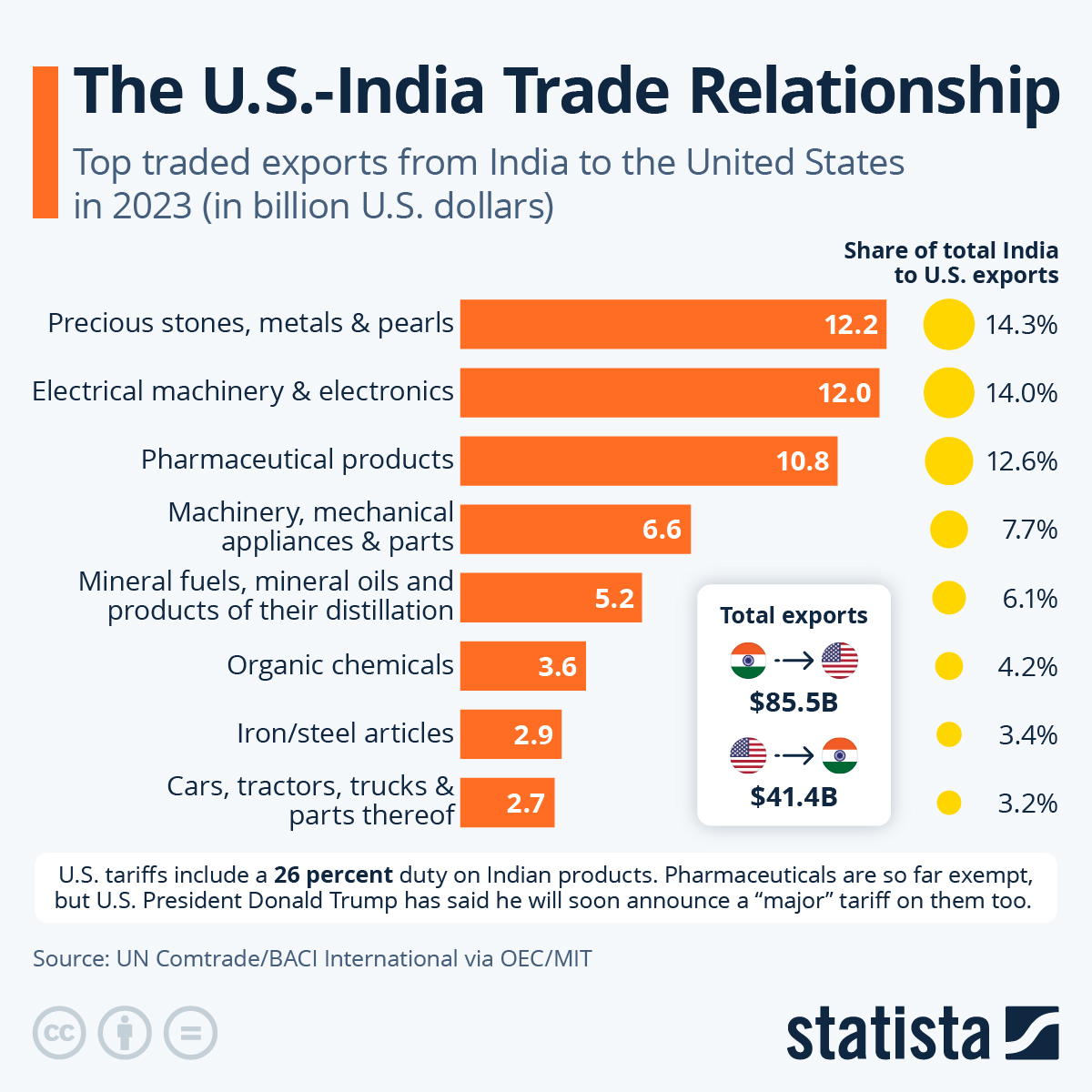
India U.S. trade relations have become increasingly complex in recent years, especially in light of recent U.S. tariffs on India which President Donald Trump imposed to address trade imbalances. These tariffs, including the noteworthy 25% duty on Indian goods, have raised concerns among Indian exporters who heavily rely on the American market. Discussions around an India trade deal have stalled, with both nations striving to find common ground amidst overlapping economic interests. The tensions reflect broader issues, such as Trump’s dissatisfaction with India’s high tariffs and trade practices, further complicating the landscape in 2023. As both countries navigate these turbulent waters, the dynamics of India exports to the U.S. are crucial, and thus, the focus on fair trade relationships has never been more pertinent.
The economic interactions between India and the United States symbolize a significant aspect of global trade dynamics, particularly as the two nations grapple with policies and tariffs that shape their partnership. Recent developments, including U.S. restrictions and high duties imposed on Indian imports, have stirred discussions about the future of bilateral agreements. As concerns mount over India’s tariffs in 2023 and the potential for a revised trade agreement, the relationship between these two economies illustrates the delicate balance of trade negotiations. With India being a vital market for U.S. exports, the evolving trade framework will undoubtedly impact various sectors on both sides. Exploring alternate routes for collaboration can pave the way toward more stable and beneficial economic ties.
Understanding U.S. Tariffs on India: Implications for Trade
The recent announcement of a 25% tariff plus additional penalties on imports of Indian goods by the U.S. government signifies a significant shift in the trade dynamics between the two countries. These tariffs are not merely fiscal measures but are symptomatic of deeper frustrations over India’s tariff practices, particularly in sectors such as agriculture and dairy. The Indian government has long been critiqued for its high tariffs and non-tariff barriers, which President Trump highlighted in his communications. This escalating situation reflects a growing tension that could impact bilateral trade relations negatively, resulting in reduced market access for Indian exporters.
Moreover, with India depending on the U.S. for about one-fifth of its total exports, these tariffs will likely challenge India’s economic stability. Indian exporters, facing these new hurdles, are concerned about how they will compete on an international front, especially with countries like South Korea and Vietnam that may have more favorable trade conditions. The impact of U.S. tariffs on India not only poses immediate challenges but also calls into question the comprehensive strategies that India will need to adopt to navigate these pressures effectively.
The Impact of Trump India Relations on Trade
Under the Trump administration, India-U.S. trade relations have been marred by tension and criticism. President Trump has variously described India’s economy and trade practices, including his reference to it as ‘dead,’ which raises concerns about the long-term implications for bilateral negotiations. The underlying issues stem from India’s complex relationships with other nations, particularly in sectors where the U.S. seeks reform, such as energy transactions with Russia. This critical stance is not just about tariffs but indicates a broader strategic alliance that Trump is attempting to establish, reflecting the geopolitical chess game in play.
Furthermore, Trump’s characterization of trade negotiations as a zero-sum game is evident in his administration’s approach. Officials like the U.S. Trade Representative have indicated that any trade deal with India must be anchored in mutual concessions, making it evident that the relationship hinges on India’s willingness to accommodate U.S. demands, particularly concerning tariffs. This tension often overshadows the collaborative aspects of trade, increasing the difficulty for negotiators on both sides and raising uncertainty about the feasibility of any upcoming trade deals.
The Future of India Trade Deals: Negotiation Challenges
As the prospect of an India trade deal hangs in the balance, both nations are at a crossroads in their negotiations. Recent statements from the Indian Commerce Ministry assert a steady commitment to their national interests while facing the pressures of U.S. demands. The U.S. is advocating for a significant reduction in tariffs, yet India remains firm in its resolve to protect specific domestic sectors. This ongoing tug-of-war complicates discussions for a bilateral trade agreement (BTA), and the lack of flexibility on either side could stymie any potential progress.
In 2023, as the international landscape evolves, it will be crucial for Indian negotiators to devise strategies that respect both domestic imperatives and international commitments. The market access issue will be pivotal; not providing adequate access could marginalize India in the global trade arena. Protective measures for agriculture might need reevaluation to optimize India’s trade position against competitors who are also vying for the U.S. market, particularly as tariffs against India become a reality.
Trade Dynamics: Shifting Alliances and Global Market Impacts
The dynamics of Indian trade relationships are shifting, influenced heavily by U.S. policy changes. As tariffs escalate, companies in India will need to adapt quickly to avoid losing market share to competitors like Vietnam or Indonesia, who may benefit from preferential treatment. This competitive landscape underscores the necessity for India to navigate its trade policies with a dual focus on retention of its export markets and compliance with international trade standards.
The introduction of new tariffs may inadvertently lead to a reevaluation of alliances in the broader Asia-Pacific region, compelling countries to reconsider their trade agreements and partnerships. The relationships forged in the context of trade are critical; as countries respond to U.S. tariffs, new alliances may emerge, potentially isolating India if it fails to secure beneficial trade deals. Therefore, maintaining viable trade relationships will require India to engage diplomatically with multiple countries to ensure its place in the global market.
Challenges for Indian Exports to the U.S.: Navigating Tariffs
Indian exports are facing an uphill battle in light of the newly imposed tariffs by the U.S. Such a 25% tariff means that many Indian goods will become significantly pricier in the U.S. market, which could depress demand sharply. With competitors having lower tariffs, Indian exporters may struggle to maintain their share in key sectors such as textiles and pharmaceuticals, which have traditionally relied heavily on the U.S. market.
Moreover, industry stakeholders are expressing deep concerns about the ramifications of these tariffs on small and medium enterprises in India. The introduction of tariffs and penalties may not only limit growth but could also threaten jobs in various export-driven sectors. Stakeholders are advocating for an urgent need to address these tariffs through strategic negotiations that may include concessions in other areas to soften the blow of U.S. policies.
Conclusion: The Path Forward for India-U.S. Trade Relations
In summary, India-U.S. trade relations are at a pivotal juncture, influenced by recent tariff announcements and geopolitical considerations. With President Trump’s administration emphasizing a hardline on trade practices, India must navigate these turbulent waters carefully. Future discussions must prioritize crafting agreements that respect both countries’ economic objectives while addressing underlying frustrations, which have become more pronounced.
As trade negotiations progress, it will be essential for Indian officials to engage comprehensively with U.S. representatives, finding common ground amid diverging interests. The collective goal should revolve around establishing a robust trade framework that not only addresses the immediate concerns surrounding tariffs but also lays down a sustainable path for future economic cooperation and growth.
Frequently Asked Questions
What impact do U.S. tariffs on India have on trade relations?
U.S. tariffs on India, such as the recently announced 25% tariff plus penalties, complicate trade relations by increasing the cost of Indian exports to the U.S. This puts Indian goods at a disadvantage compared to competitors like South Korea and Vietnam, hindering India’s overall export performance.
Are there any recent developments in the India-U.S. trade deal negotiations?
Negotiations for a trade deal between India and the U.S. have stalled, with U.S. Trade Representative stating that further discussions are needed. Both countries have remained firm on their respective positions regarding tariffs and market access, leading to uncertainty about reaching a consensus.
How do India exports to the U.S. relate to bilateral trade relations?
India exports approximately one-fifth of its total exports to the U.S., making it a crucial component of India’s economy. Changes in trade policies, such as increased tariffs by the U.S., can adversely affect these exports and thereby impact India-U.S. trade relations significantly.
What are the implications of India tariffs 2023 for U.S. trade relations?
The India tariffs in 2023 are a result of the ongoing trade tensions with the U.S. The U.S. aims to lower these tariffs to enhance market access for American goods, while India is focused on protecting its agricultural sectors, complicating the path toward a favorable trade agreement.
How have Trump India relations affected the current trade scenario?
Trump’s administration has seen heightened criticism of India’s tariff policies and its dealings with Russia, which have soured relations. His comments and policies suggest a tougher stance on India’s trade practices, impacting both countries’ willingness to negotiate a beneficial trade deal.
| Key Points | Details |
|---|---|
| 25% Tariff by U.S. | A 25% tariff on Indian imports was announced by President Trump, indicating ongoing tensions. |
| U.S. Dissatisfaction | Trump has criticized India for high tariffs and dealings with Russia on energy and military equipment. |
| Trade Deal Negotiations | U.S. Trade Representative stated that more negotiations are needed for a trade agreement. |
| Shift in Relations | Trump’s comments about Pakistan and India’s economy indicate a strain in relations. |
| Stalemate on Tariffs | The U.S. wants India to lower tariffs while India seeks to protect its agriculture. |
| Impact of Tariffs | 25% tariffs could disadvantage India against competitors like South Korea and Vietnam. |
Summary
India U.S. trade relations have hit a critical juncture following the U.S. imposition of a 25% tariff on Indian goods, as indicated by President Trump’s recent remarks. This development reflects long-standing dissatisfaction over India’s trade practices and relationships with other countries, notably Russia. Both nations have entrenched positions: the U.S. demands lower tariffs while India prioritizes its agricultural sector’s protection. Consequently, while both sides have expressed intentions to negotiate a Bilateral Trade Agreement, achieving a fair deal requires significant effort from Indian negotiators to navigate these complex dynamics.
कृपया इसे कम से कम 1 व्यक्ति को साझा करें Please Share this with atleast 1 Person:

Discover more from CNE Khabar
Subscribe to get the latest posts sent to your email.